
Travel information
UK contactless eGates in 2026: what arriving travellers actually need to know
2026-10-14
A smoother arrival is welcome news. But the UK's new contactless airport gates do not mean border checks have disappeared — and they do not remove the need to prepare your travel documents or family handover arrangements.
What has changed?
On 6 October 2026, the UK Home Office announced the phased introduction of contactless airport eGates. The technology compares a live facial image with verified identity and travel information. Eligible passengers may be able to use a gate without placing their passport on the reader. The usual immigration and security checks still take place.
The initial rollout is limited to British citizens, with a small number of gates at East Midlands Airport. The government expects expansion to other airports and, later, other eligible nationalities. This is not a nationwide service that every traveller can use today. Read the official Border Force guidance.
Do you still need your passport?
Yes. Travellers must carry a valid passport. If the contactless comparison cannot complete, they may be directed to present the passport at the reader or speak to a Border Force officer. Contactless processing also does not replace any visa, eVisa or ETA requirements that apply to the traveller.
Is a standard eGate the same as a contactless eGate?
No. Existing eGate eligibility is broader than the first group allowed to use the new contactless function. UK Border Force says standard eGates may be used by qualifying passengers aged eight and over; children aged eight to 17 must be accompanied by an adult, and other conditions apply. Families should follow the current guidance and any instructions at the airport rather than assume every gate works identically. Official eGate eligibility information.
What about travellers who need assistance?
Technology can simplify one step of the journey, but it cannot replace practical care. Travellers with disabilities or reduced mobility may be entitled to airport assistance free of charge under relevant UK rules. The Civil Aviation Authority recommends making the request when booking, or at least 48 hours before departure where possible, through the airline, travel agent or tour operator. CAA guidance on requesting assistance.
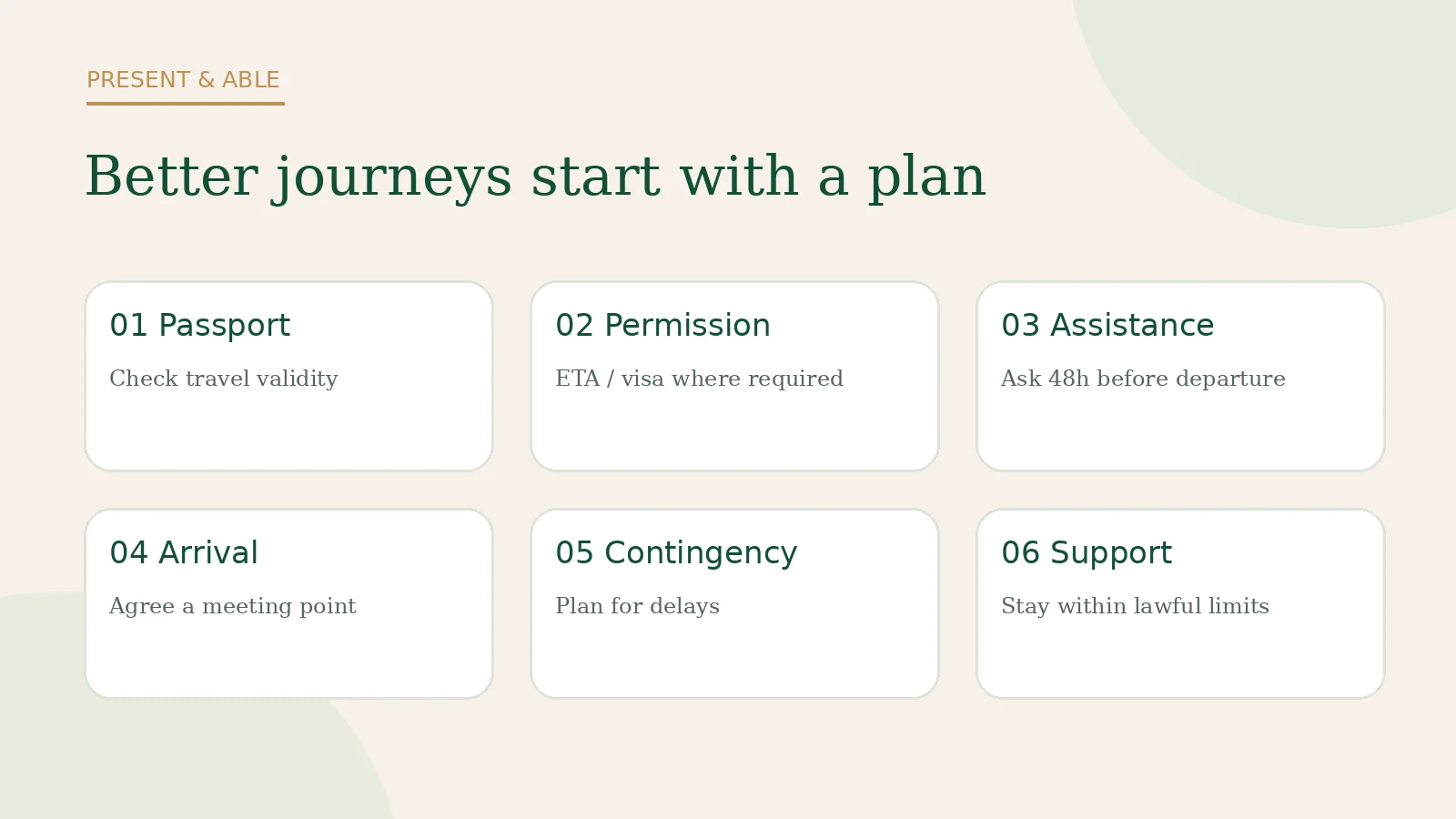
The five-minute family-arrival check
- Documents: Confirm passport validity and the right visa, eVisa or ETA for each traveller, where applicable.
- Assistance: Make any eligible airport assistance request in advance and save the confirmation.
- Transfer: Agree the meeting point after border control and baggage collection.
- Communication: Have an alternative number if a phone or roaming connection fails.
- Disruption: Decide who will respond if a flight is cancelled, diverted or substantially delayed.
For parents welcoming relatives, international students meeting family, or travellers managing complex itineraries, the final part of the journey matters just as much as the flight itself.
A reliable presence when you cannot be there.
PRESENT & ABLE helps people explore practical, person-to-person support around international journeys. Any support is subject to location, availability, lawful access and written agreement. No private service can guarantee admission at the UK border or bypass official checks.
Explore PRESENT & ABLE / Request Support →
Official sources
- Home Office announcement, 6 October 2026
- Border Force contactless eGate guidance, updated 6 October 2026
- Border Force standard eGate eligibility
- UK government ETA guidance
- Civil Aviation Authority, assistance requests
This article provides general travel information, not legal, medical or immigration advice. Requirements can change; always consult the relevant official authority before travelling.